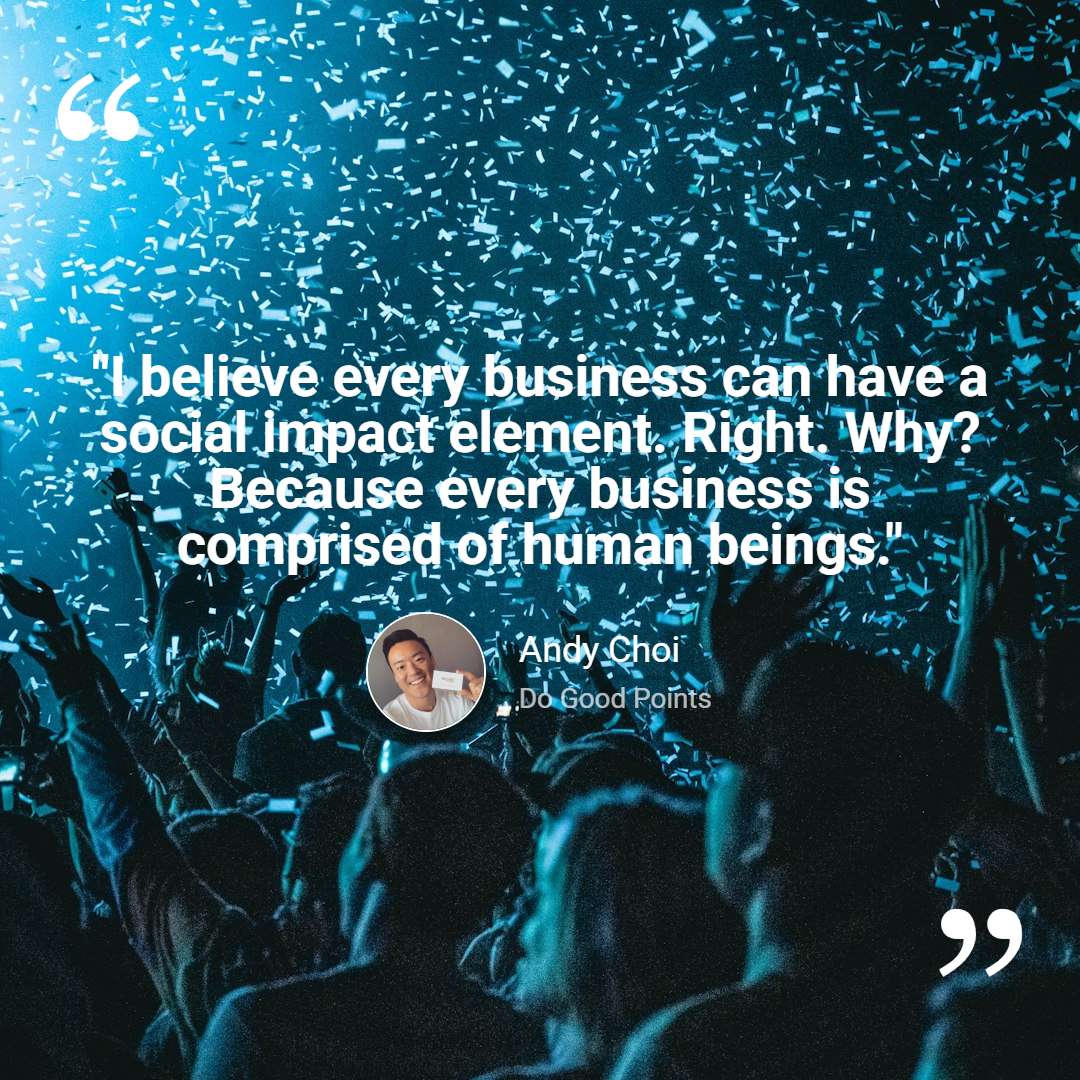
The workforce is more detached from its work than it has ever been measured to be. Andy Choi of Do Good Points thinks the fix and the business opportunity are the same thing. Jeremy Rivera talks to him about profit with purpose, and about why non-profits need to think more like companies rather than less.
Andy starts from workforce dissatisfaction, and treats it as a signal rather than a complaint. People are not detached because the work is hard. They are detached because they cannot see what it is for.
That is a solvable problem and it is solvable commercially, which is the part that makes this episode more than a values conversation.
Marketing can be a tool for social good, and Andy’s argument is that it is one of the few tools with enough reach to matter. A campaign that moves product and funds a cause is not a compromise between the two. It is the only version that is sustainable, because the moment the budget tightens a pure-cost programme is the first thing cut.
He is direct that every business can incorporate a social impact element. The barrier is imagination, not category.
This is the uncomfortable half of the conversation. Non-profits, in Andy’s view, have been trained into a mindset that treats money as slightly shameful, which leaves them permanently dependent and permanently under-resourced.
Resources are what solve societal problems. An organisation that cannot fund itself is not more virtuous. It is just smaller.
The practical opportunity: there are plenty of commercial companies that would happily extend their marketing reach through a genuine non-profit partnership. Save Fry Oil comes up in the episode as exactly that kind of business.
Brand equity is tied to social responsibility now. That means the partnership is worth something real to the company, which is what makes it durable rather than a favour.
The closing note is a call to action, and it is specific. Pick the thing that breaks your heart rather than the thing that scores well. Then do something, because intention without action is where most of this sector’s energy goes to die.
| Entity | What it is |
|---|---|
| Andy Choi | Founder of Do Good Points |
| Do Good Points | His platform for integrating social impact into business operations |
| The Great Detachment | Workforce dissatisfaction, read as a signal about meaning rather than pay |
| Profit with purpose | Running social impact as part of the commercial model, not alongside it |
| Brand equity | Increasingly tied to demonstrated social responsibility |
| Save Fry Oil | Example of a for-profit that gains real marketing reach from a non-profit partnership |
Every link above goes somewhere different. These are the ones not already mentioned above.
Do Good Points is at dogoodpoints.com.
Choi, Andy. Interviewed by Jeremy Rivera. “Profit with Purpose & Overcoming The Great Detachment.” Unscripted Green & Non-Profits, 2025. https://unscripted-green-non-profits.castos.com/episodes/andy-choi-of-do-good-points-profit-with-purpose-overcoming-the-great-detachment
Only 24% of C-suite executives are women. 94% of them played sports. Melyssa Jaskiewicz built Leveling the Fields on the space between those two...
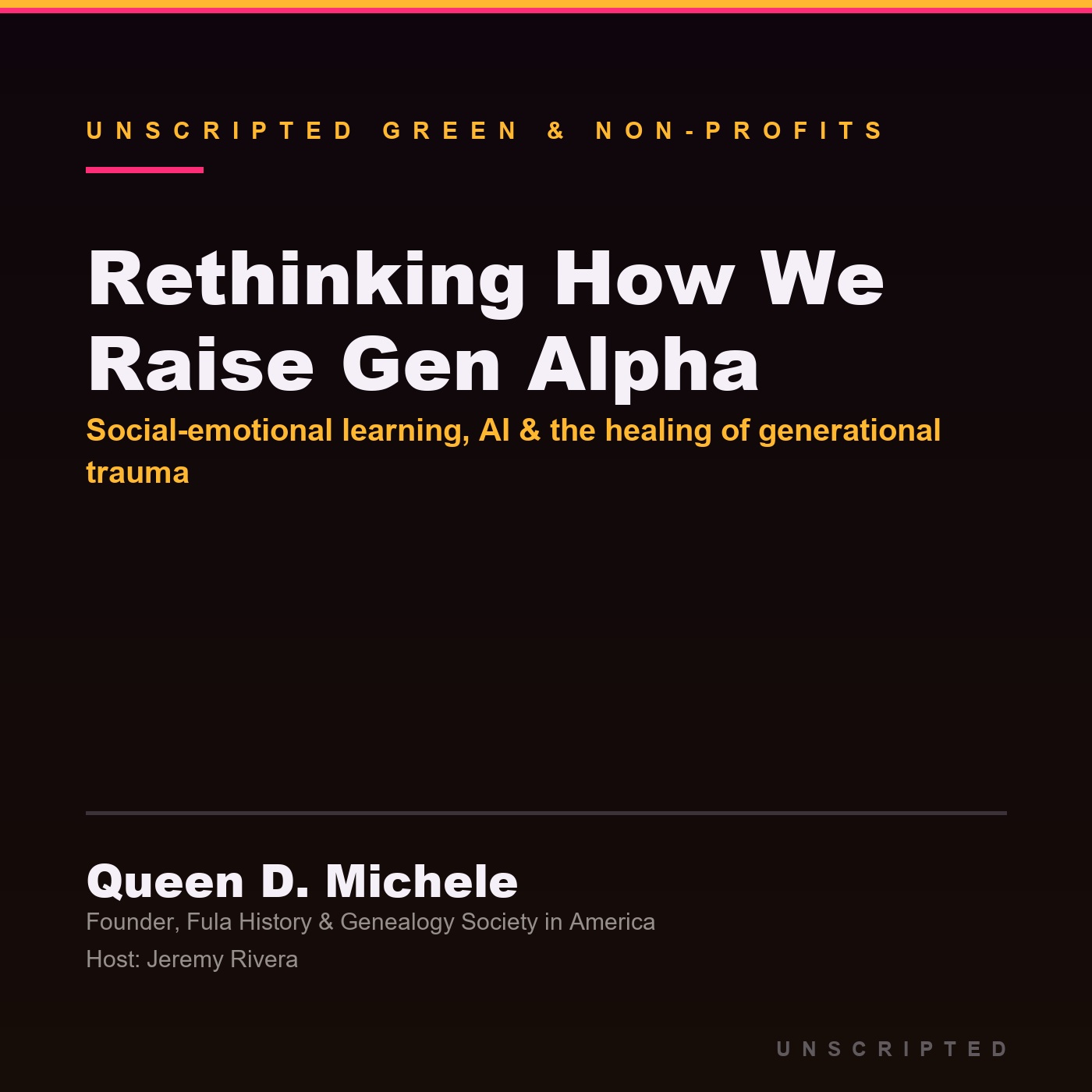
You cannot teach a child to regulate if you are dysregulated yourself. Queen D. Michele spent 27 years in classrooms before founding the Fula...
Paul Pape is the barkeep and game master at Gamify Business, where he turns strategy and operational problems into role-playing game mechanics. It started...